

Rent increase successfully defeated: Hamburg tenant saves over €100 a month
The residents of a Hamburg period building receive a rent increase of 14.99%, even though the rent was already above the local comparable rent. Florian K. (name changed) was not prepared to accept it and wanted to fight off his rent increase of €105.94. The landlord took his objection personally, and Florian decided to seek professional help – he turned to CONNY. We talk to him about how the rent increase was defeated and what his neighbours did.
Even before the rent increase, you were not exactly happy with the situation in the building. Why?
Florian: "The building belongs to a community of heirs. My impression is that they are chronically short of money but try to squeeze everything they can out of the building. On the one hand, they let the place rot. The cellars are mouldy and locked off. An electrician told me the wiring runs every which way and barely meets safety standards. The windows are draughty. The taps drip. On the other hand, they skim off as much as they can. The new neighbours pay almost double my rent per square metre. And then came this rent increase of 14.99 per cent..."
Landlords can raise the rent by up to 15% within three years (§ 558 BGB), as long as the new rent stays within the rent index. What made you think the rent increase was unlawful anyway?
Florian: "I simply couldn't imagine that the increase was justified. Even though the letter cited the legislation…"
All landlords like to do that – quote sections from the German Civil Code (BGB). It intimidates tenants. They are meant to think the landlord knows better what he is doing….
Florian: "Yes. So I did my research. I downloaded the rent index (Mietspiegel) from the City of Hamburg's website and checked where my rent stood. And it looked as though my rent was already above the permitted maximum before the increase. So I first wrote a letter myself, reported all the defects and asked them to make me a new offer."
And what was the reply?
Florian: "An emotional letter in which the head of the property management company complained about the rumour mill in the building. The most outrageous part, though, was the claim that it is legal to charge 20 per cent more rent than the maximum in the rent index – without citing a single law for it..."
Excerpt from the reply to Florian K.:
"A rent payment of up to 20% above the maximum value is lawful." "We would be grateful if you (...) assessed our cooperation honestly and did not lump us in with the "Hamburg rent scaremongers"."
Falsely claiming on the one hand that 20 per cent above the rent index is lawful, and on the other hand objecting to being called a rent shark…
Florian: "Yes, quite something. That's when I knew I wouldn't get any further on my own. I had already read about wenigermiete.de in the weekly paper Die Zeit and then looked at customer reviews and media articles to check whether you were legitimate. I liked that I could describe the situation and simply upload the documents. And that checking the rent increase costs nothing to begin with. If you had found that the demand was in order, I could still have given in to it without having to pay anything."
Why didn't you go through a tenants' association?
Florian: "I've never been a member. I'm also not really the type for “insurance” where you pay every month without knowing whether a case will ever arise."
How did the defence against the rent increase go?
Florian: "Pretty straightforward – you sent the letter of objection to the landlord. He then had two months to file a claim to make me consent to the rent increase. As he didn't, the rent increase was off the table after about four months."
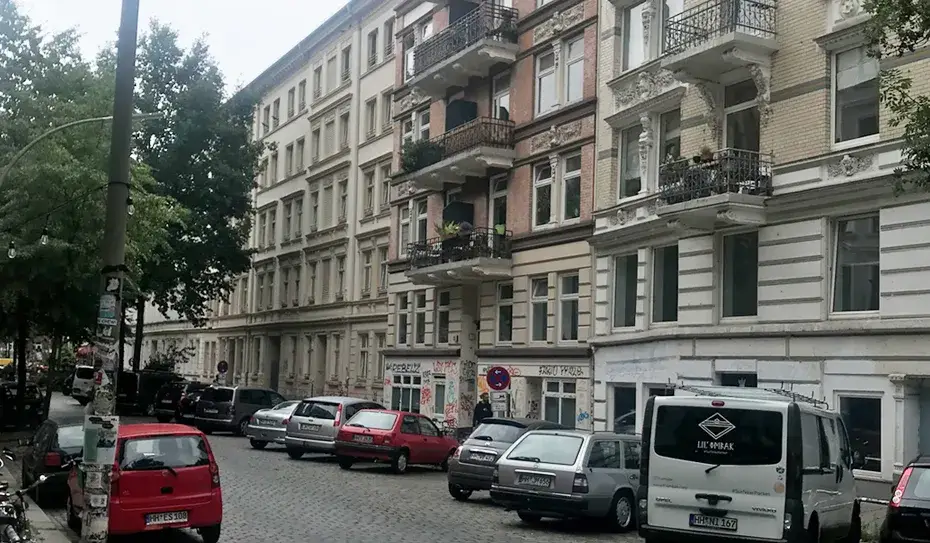
In this building on Wohlwillstraße, Florian K. and many other tenants received a rent increase.
Is there anything we could have done better?
Florian: "Signing up was very straightforward. But I would have liked to be kept a bit better informed about the state of play. Especially when and what was communicated with the landlord…."
Thank you, we will work on keeping our customers better informed about the progress of their cases. How did your neighbours in the building fight the rent increases, and were they successful?
Florian: "Some tenants successfully fought off the demands through the tenants' association. Others, who had lived there much longer and paid less rent than I did, accepted the rent increase. And the new arrivals, who pay almost €20 per square metre, hadn't received a rent increase at all."
The rental market is already heavily regulated (rent control (Mietpreisbremse), the cap on rent increases and so on). Is that enough to protect your neighbourhood from exploding rents and gentrification?
Florian: "The current trend is definitely worrying. Here in my neighbourhood, freelance journalists, photographers, artists and musicians still live next door to the Porsche drivers who park their cars in the underground garage. But if rents keep rising, many ways of life will no longer work here. That has to stop. Why don't we do it like Denmark? There, foreign investors and private individuals living abroad are not allowed to buy residential property. Not like here, where big property funds leave many buildings empty because they can offset the losses internally."